
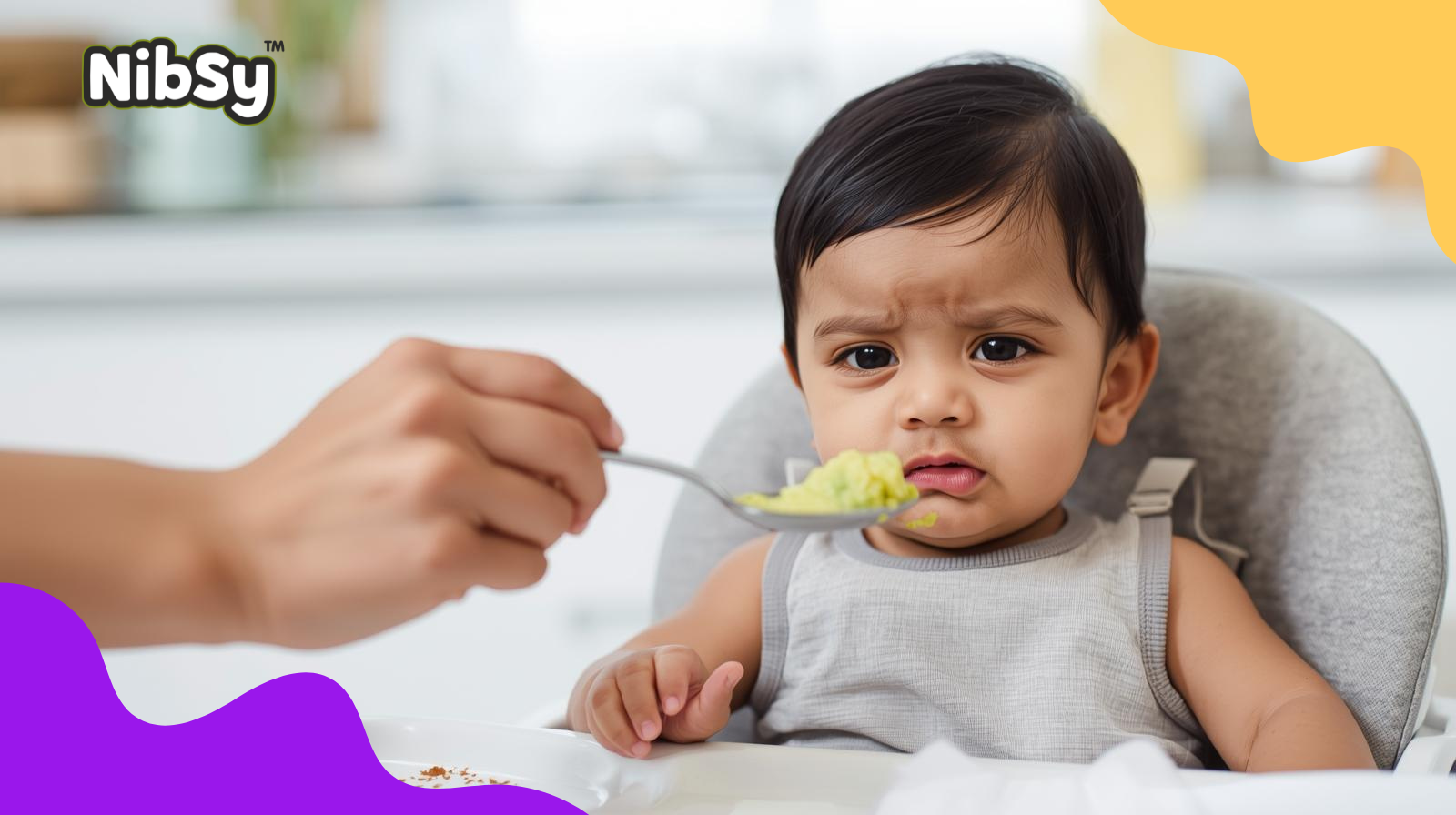
Introducing solid foods is an exciting milestone but for many parents, it turns into a concern when their baby refuses to eat. If your baby turns their head away, keeps their mouth shut, or spits food out, you’re not alone. Food refusal during early feeding is very common, and in most cases, completely normal.
Let’s understand why babies refuse solid food, what you can do about it, and when it’s time to seek expert advice.
Is It Normal for Babies to Refuse Solid Food?
The answer is YES.
The transition from milk to solids is a learning process, not an instant switch. Babies need time to get used to new textures, tastes, smells and even the act of eating from a spoon.
Food refusal in the first few weeks or even months of starting solids does not mean your baby dislikes food or will become a picky eater, it’s pretty normal actually..
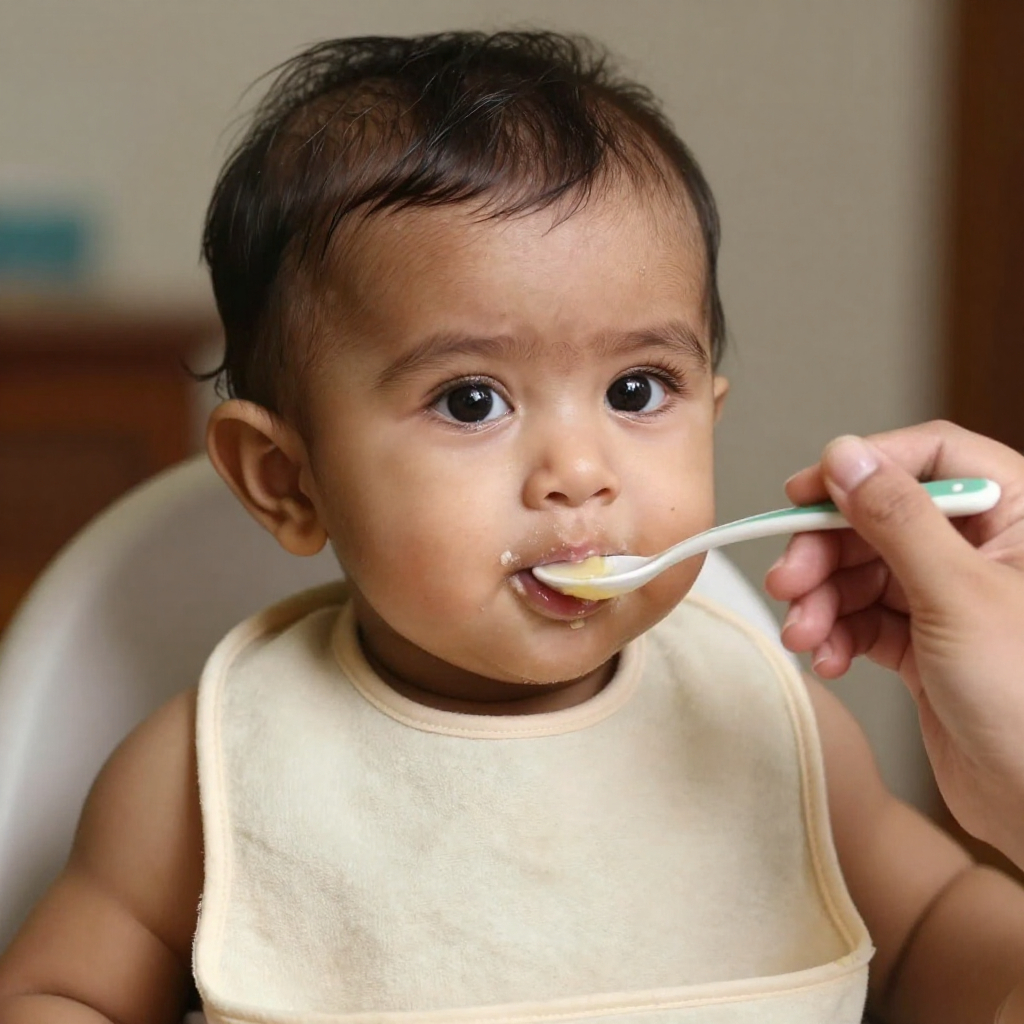
Common Reasons Why Babies Refuse Solid Food
Signs your baby may not be ready yet:
- Poor head and neck control
- Inability to sit with minimal support
- Pushing food out with the tongue (tongue-thrust reflex)
If these signs are present, it’s okay to pause and try again after a few days.
Breast milk or formula is comforting & effortless to consume. Solid food requires:
- chewing or moving food around the mouth
- swallowing thicker textures
- more effort overall
Texture plays a huge role while introducing solids.
- Very thick food can feel overwhelming
- Lumpy textures introduced too early may cause gagging
- Some babies prefer smoother purées initially
Starting with smooth, soft purées and slowly progressing helps babies build confidence.
If solids are offered immediately after a milk feed or when the baby is tired or sleepy they may naturally refuse food.
Try offering solids when your baby is alert, calm and slightly hungry (not overly full or cranky)
Teething, mild illness, or a cold can be culprit of not eating solids resulting reduced appetite.
During such discomfort, babies may prefer milk and refuse solids, which is pretty normal.
Babies are sensitive to stress. Force-feeding, distraction, or repeated attempts to “just get one more bite” can create negative associations with food.
Mealtimes should feel relaxed and pressure-free.
What Can Parents Do to Encourage Eating?
- Respect signals like turning the head away, closing the mouth or pushing food away.
Stop when your baby says “NO” this builds trust. - Begin with 1–2 teaspoons once a day. Even a few tastes are enough in the beginning.
- Expose your baby to various flavours, colours and ingredients, Volume comes later once baby is comfortable with all the flavours and shows interest.
- Offer solids at a similar time each day this will help babies to understand what to expect.
- Babies are really good at observing and they learn most os stuff by watching, so eat together as a family this will help to grow interest in food.
When Should you be concerned?
Refusal is usually normal, but consult pediatrician if:
- your baby consistently refuses solids even after 8–9 months of age
- there is poor weight gain
- feeding causes distress or choking
- your baby shows difficulty swallowing the food
A Note to Parents
Baby’s realtionship with food is developed eventually so be Patience and consistent. Meal refusal once or even serveral time does not define thier eating habits.
How Nibsy Supports Parents
At Nibsy, we believe feeding should feel reassuring, not stressful. Our approach is rooted in understanding baby behaviour, respecting developmental readiness and offering clean, thoughtfully prepared food options that support early feeding journeys, one gentle bite at a time.
(Stay tuned for our upcoming launch. Follow us on Instagram @nibsy_official for expert-backed tips and feeding guidance.)
Conclusion
Your baby’s first solid food is a beautiful memory, a wonderful journey that shapes your baby’s health for years to come and keeps your baby safe. Nutritious food makes your baby capable of fighting various diseases. With the right information and a little planning you can provide your children safe and hygienic food. Remember, variety, safety and love are the secret ingredients.
Frequently Asked Questions (FAQs)
Yes, Every baby is different, they accept solids on their own pace. Initial solid refusals are Normal.
You can continue offering food(no pressure on baby), as some baby needs multiple exposures to get use to the new texture and tastes.
Yes. Teething, minor illness, or growth spurts can temporarily affect appetite. Feeding usually improves once your baby feels more comfortable.
If your baby consistently refuses solids even after several weeks, shows poor weight gain, or seems distressed during feeding, it’s best to consult a pediatrician for guidance.