Get 5% Off on orders above ₹499. I Use Coupon - NIBSYA5 Get 20% off on your first purchase | Use Code - NIBSY20 Get 10% Off on orders above ₹999. I use coupon - NIBSY10

Feeding Basics

Feeding Basics

Iron Rich Food For Baby

Iron-Rich Food for Babies in India: What Parents Should Know

After the age of 6 months, Iron became one of the most important nutrients for babies. During the first 6 months irons are fulfilled through breast milk or formula. Iron deficiency is common in infants and young children in India, that’s why choosing the balanced meal is important. Why Iron Is Important for Babies Iron plays a crucial role in the overall development of a baby. Iron deficiency can significantly hinder a baby’s growth process. Iron plays an important role: It is essential for healthy growth and development. It aids in the complete development of the brain. It helps in carrying oxygen in the baby’s blood. Over time, iron deficiency can affect a baby’s energy levels, appetite, and overall development and can compromise their health. This is why iron-rich foods are recommended soon after starting solid foods. Iron-rich food is very beneficial for a baby’s health. When Do Babies Need Iron Rich Foods? Around 6 months of age, the natural iron stores in a baby’s body begin to deplete. This can lead to iron deficiency in the baby. At this stage: The baby’s body can no longer meet its iron requirements solely from milk. Complementary foods should include sources of iron so that the baby can absorb it properly. Initially,  small amount is sufficient for the baby. While continuing breast feeding or formula feeding, whichever the baby is receiving, iron-rich foods should be gradually introduced into the diet. Iron-Rich Indian Foods for Babies 1. Moong Dal (Green Gram Lentils): In India, it is common to use moong dal as the first lentil for babies. It wouldn’t be wrong to say that it’s one of the traditional foods because this lentil is very nutritious, lighter, and easier to digest compared to other lentils.How to offer: After thoroughly cleaning the lentils, wash them very well, then cook them until they are very soft, and mash them well before feeding. This will ensure that your baby doesn’t have any difficulty eating it. 2. Masoor Dal: Masoor dal (red lentils) contains a sufficient amount of iron. It is often given to babies when they are able to digest regular lentils.How to offer: Cook this dal thoroughly in a pressure cooker and mash it until it forms a smooth paste. Then feed it to your baby. 3. Ragi (Finger Millet): Ragi is a traditional Indian food. Ragi is one of the famous iron-rich grains. It is suitable for a baby’s diet in every way.How to offer: Use properly prepared homemade ragi flour and cook it well to avoid lumps. Then use it. 4. Rice and Lentil Mixture: Combining grains with lentils makes the overall intake of nutrients better and more delicious.How to offer: We can give our baby a soft khichdi made by mixing all the grains, which is very easily digestible. Sometimes you can give your baby lentils mixed with rice, which is very beneficial for a growing baby. 5. Green Leafy Vegetables (in moderation): Vegetables like spinach or drumstick leaves are rich in iron.How to offer: Clean and wash the green leafy vegetables properly, cook them well, and mash them. After that, you can mix it with any food. Initially, give it to your baby in small quantities. How Much Iron Do Babies Need in the First Year? A baby’s iron needs change during the first year. Infants are born with natural iron stores, as these natural stores reduce, babies begin to need more iron from foods after 6 months. Iron intake may vary for breastfed and for formula-fed babies. Some breastfed babies may need iron supplements, while babies consuming iron-rich formula milk usually do not require supplements. Research suggests that babies need around 0.27 mg of iron per day up to 6 months, increasing to around 11 mg per day between 7 and 12 months. Tips to improve iron absorption: Give your baby iron-rich foods regularly, not just occasionally, as iron is essential for their growth and development. Combine iron-rich foods with vitamin C-rich vegetables (such as pumpkin or squash). This will make it both tasty and nutritious. Always avoid giving your baby tea, coffee, or sugary foods. Never give these things to your baby. Keep the texture of your baby’s food soft and appropriate for their age. A Gentle Reminder Every baby is diffrent, some babies accept iron-rich foods easily, while others need time. Go slow with solids, follow your baby’s signs. Consult your pediatrician if you have any concerns about growth or nutrition of your baby. How Nibsy Supports Parents At Nibsy, we believe that early feeding should be simple, balanced and stress-free. Our role is to support parents with clean, thoughtfully prepared options while encouraging informed and mindful feeding choices at home. Frequently Asked Questions (FAQs)​ Q1. Can my baby get enough iron from milk alone after 6 months? After 6 months, milk alone may not meet a baby’s increasing iron needs. That’s why iron-rich complementary foods are recommended alongside breast milk or formula. Q2. How often should I offer iron-rich foods to my baby? Iron-rich foods can be offered regularly in small amounts as part of everyday meals. Consistency over time is more important than quantity in the beginning. Q3. How can I help my baby absorb iron better from food? Offering iron-rich foods along with vitamin C–rich vegetables and keeping textures age-appropriate can support better absorption. Q4. When should I consult a pediatrician about iron intake? If you have ongoing concerns about your baby’s feeding, growth, or overall nutrition, it’s best to consult a pediatrician for guidance. Q5. Do breastfed babies always need iron supplements? Not always. Some breastfed babies may be advised supplementation based on individual needs, but this should only be done if recommended by a pediatrician.

Iron-Rich Food for Babies in India: What Parents Should Know Read More »

Baby Refusing Solid Food

Why Is My Baby Refusing Solid Food? Causes, Solutions & When to Worry

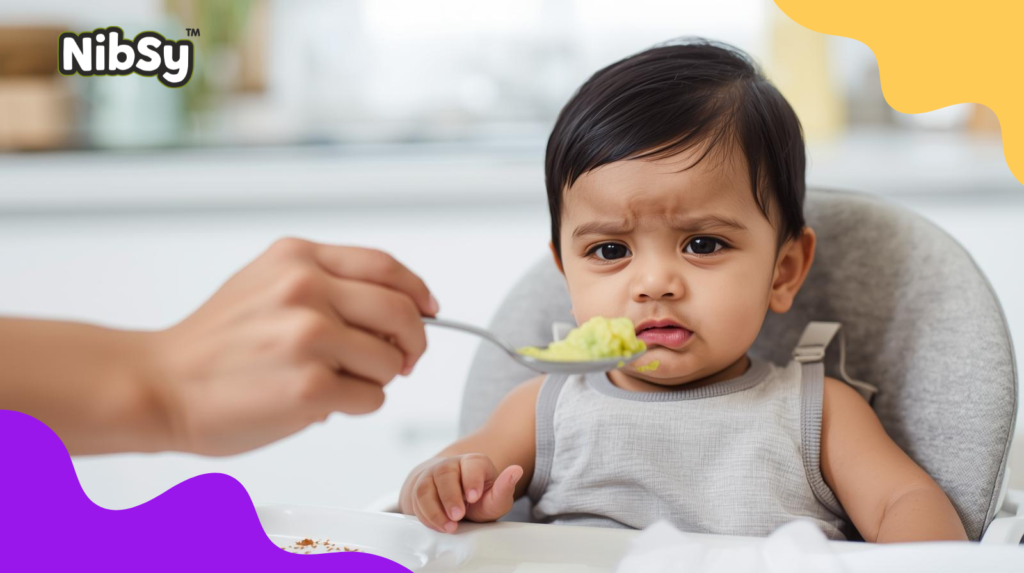
Introducing solid foods is an exciting milestone but for many parents, it turns into a concern when their baby refuses to eat. If your baby turns their head away, keeps their mouth shut, or spits food out, you’re not alone. Food refusal during early feeding is very common, and in most cases, completely normal. Let’s understand why babies refuse solid food, what you can do about it, and when it’s time to seek expert advice. Is It Normal for Babies to Refuse Solid Food? The answer is YES.The transition from milk to solids is a learning process, not an instant switch. Babies need time to get used to new textures, tastes, smells and even the act of eating from a spoon.Food refusal in the first few weeks or even months of starting solids does not mean your baby dislikes food or will become a picky eater, it’s pretty normal actually.. Common Reasons Why Babies Refuse Solid Food Not Ready Yet Milk is Comforting Texture Acceptance Not Hungary Not Comfortable Force Feeding Signs your baby may not be ready yet: Poor head and neck control Inability to sit with minimal support Pushing food out with the tongue (tongue-thrust reflex)If these signs are present, it’s okay to pause and try again after a few days. Breast milk or formula is comforting & effortless to consume. Solid food requires: chewing or moving food around the mouth swallowing thicker textures more effort overall Texture plays a huge role while introducing solids. Very thick food can feel overwhelming Lumpy textures introduced too early may cause gagging Some babies prefer smoother purées initially Starting with smooth, soft purées and slowly progressing helps babies build confidence. If solids are offered immediately after a milk feed or when the baby is tired or sleepy they may naturally refuse food. Try offering solids when your baby is alert, calm and slightly hungry (not overly full or cranky) Teething, mild illness, or a cold can be culprit of not eating solids resulting reduced appetite.During such discomfort, babies may prefer milk and refuse solids, which is pretty normal. Babies are sensitive to stress. Force-feeding, distraction, or repeated attempts to “just get one more bite” can create negative associations with food. Mealtimes should feel relaxed and pressure-free. Signs your baby may not be ready yet: Poor head and neck control Inability to sit with minimal support Pushing food out with the tongue (tongue-thrust reflex)If these signs are present, it’s okay to pause and try again after a few days. Breast milk or formula is comforting & effortless to consume. Solid food requires: chewing or moving food around the mouth swallowing thicker textures more effort overall Texture plays a huge role while introducing solids. Very thick food can feel overwhelming Lumpy textures introduced too early may cause gagging Some babies prefer smoother purées initially Starting with smooth, soft purées and slowly progressing helps babies build confidence. If solids are offered immediately after a milk feed or when the baby is tired or sleepy they may naturally refuse food. Try offering solids when your baby is alert, calm and slightly hungry (not overly full or cranky) Teething, mild illness, or a cold can be culprit of not eating solids resulting reduced appetite.During such discomfort, babies may prefer milk and refuse solids, which is pretty normal. Babies are sensitive to stress. Force-feeding, distraction, or repeated attempts to “just get one more bite” can create negative associations with food. Mealtimes should feel relaxed and pressure-free. What Can Parents Do to Encourage Eating? Respect signals like turning the head away, closing the mouth or pushing food away.Stop when your baby says “NO” this builds trust. Begin with 1–2 teaspoons once a day. Even a few tastes are enough in the beginning. Expose your baby to various flavours, colours and ingredients, Volume comes later once baby is comfortable with all the flavours and shows interest. Offer solids at a similar time each day this will help babies  to understand what to expect. Babies are really good at observing and they  learn most os stuff by watching, so eat together as a family this will help to grow interest in food. When Should you be concerned? Refusal is usually normal, but consult pediatrician if: your baby consistently refuses solids even after 8–9 months of age there is poor weight gain feeding causes distress or choking your baby shows difficulty swallowing the food A Note to Parents Baby’s realtionship with food is developed eventually so be Patience and consistent. Meal refusal once or even serveral time does not define thier eating habits. How Nibsy Supports Parents At Nibsy, we believe feeding should feel reassuring, not stressful. Our approach is rooted in understanding baby behaviour, respecting developmental readiness and offering clean, thoughtfully prepared food options that support early feeding journeys, one gentle bite at a time. (Stay tuned for our upcoming launch. Follow us on Instagram @nibsy_official for expert-backed tips and feeding guidance.) Conclusion Your baby’s first solid food is a beautiful memory, a wonderful journey that shapes your baby’s health for years to come and keeps your baby safe. Nutritious food makes your baby capable of fighting various diseases. With the right information and a little planning you can provide your children safe and hygienic food. Remember, variety, safety and love are the secret ingredients. Frequently Asked Questions (FAQs) Q1. Is it normal for babies to refuse solid food at first? Yes, Every baby is different, they accept solids on their own pace. Initial solid refusals are Normal.  Q2. How long should I keep offering solids if my baby refuses? You can continue offering food(no pressure on baby), as some baby needs multiple exposures to get use to the new texture and tastes. Q3. Can teething or illness cause a baby to refuse solids? Yes. Teething, minor illness, or growth spurts can temporarily affect appetite. Feeding usually improves once your baby feels more comfortable. Q4. When should I worry if my baby refuses solid food? If your baby consistently refuses solids even after several weeks, shows poor weight gain, or seems distressed

Why Is My Baby Refusing Solid Food? Causes, Solutions & When to Worry Read More »

Shopping Cart
Shopping cart0
There are no products in the cart!
Continue shopping
0

Inquiry Now

Contact Form