
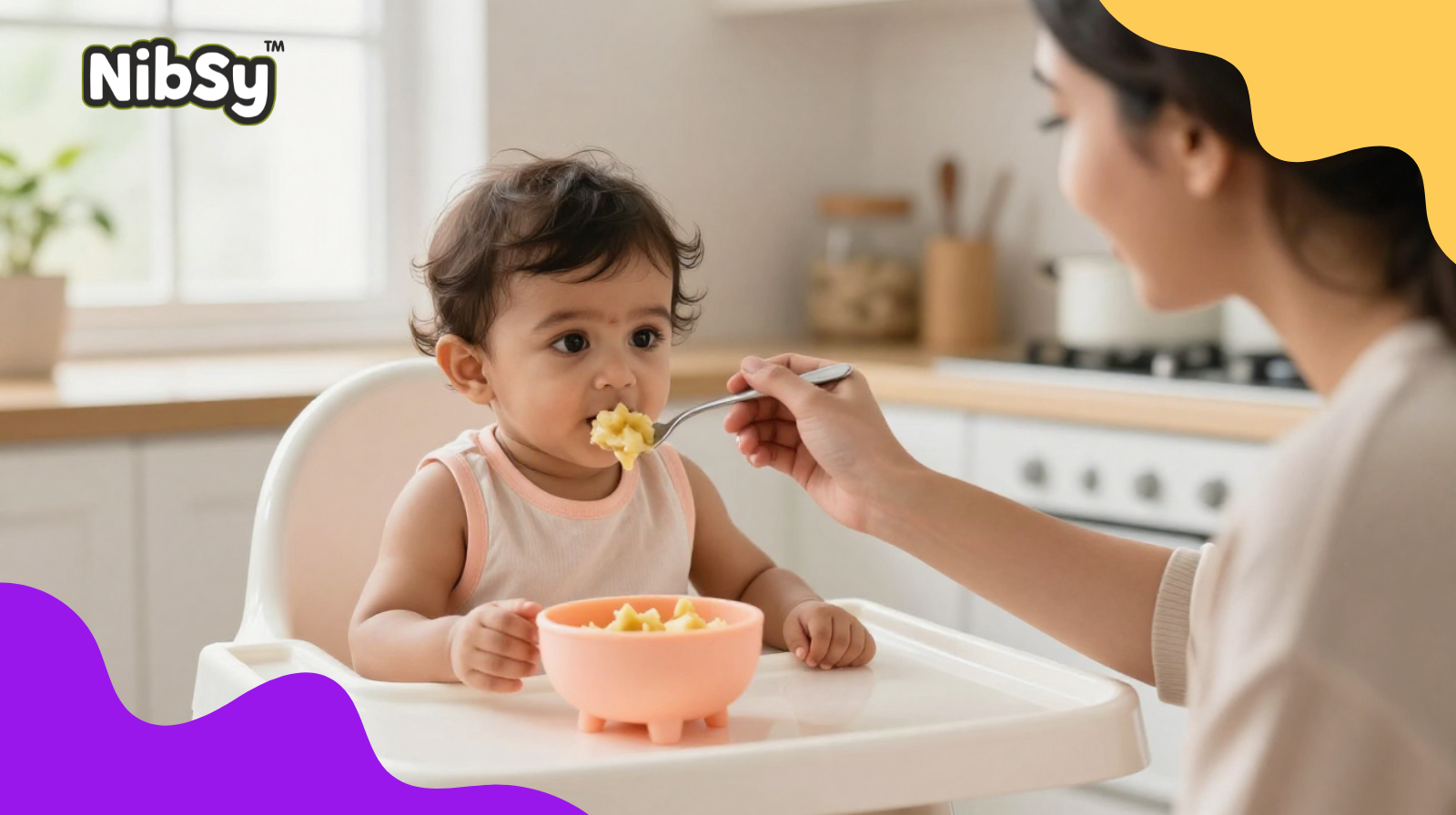
Hi beautiful moms ❤️
If you are feeling worried about your baby, you’re not alone.
Every mother understands this feeling. From the moment your little one enters the world, time seems to fly. Suddenly, the baby who depended only on breast milk is ready for their first solid food a milestone that brings both excitement and anxiety.
As parents, we all want the same thing: safe, clean, nutritious, and wholesome food for our babies. Especially nowadays, when the market is flooded with countless baby food options, choosing the right food can feel overwhelming.
This guide will help you confidently begin your baby’s complementary feeding journey, based on recommendations from trusted organizations like the World Health Organization (WHO) and FSSAI.
Why Starting Solids at 6 Months is Important
According to WHO and FSSAI guidelines, 6 months is the ideal age to introduce solid foods to babies.
Until 6 months, breast milk acts complete source of nutrition. However, after 6 months, a baby’s nutritional needs increase, especially for iron, protein, and other vital micronutrients that breast milk alone can no longer fully supply.
Key Expert Recommendations:
- Continue breastfeeding up to 2 years or beyond
- Introduce solid foods alongside breast milk
- Offer a variety of foods and flavors to develop healthy eating habits early
- Starting solids at the right time supports proper growth, brain development, and immunity.
Best Baby’s First Food
When starting solids for Baby, ensure that the food is smooth, easily to digest and rich in nutrients.
- Iron-Rich Foods like Mashed lentils or dal
Pureed meats or eggs (well-cooked) - Fruits & Vegetables like Steamed and mashed carrots, pumpkin, sweet potato, Pureed apple, pear, banana
- Alternatives If your baby needs a gluten-free diet, due to allergy or family history of celiac disease you can feed Rice, Millets, Quinoa, Amaranth, Buckwheat.
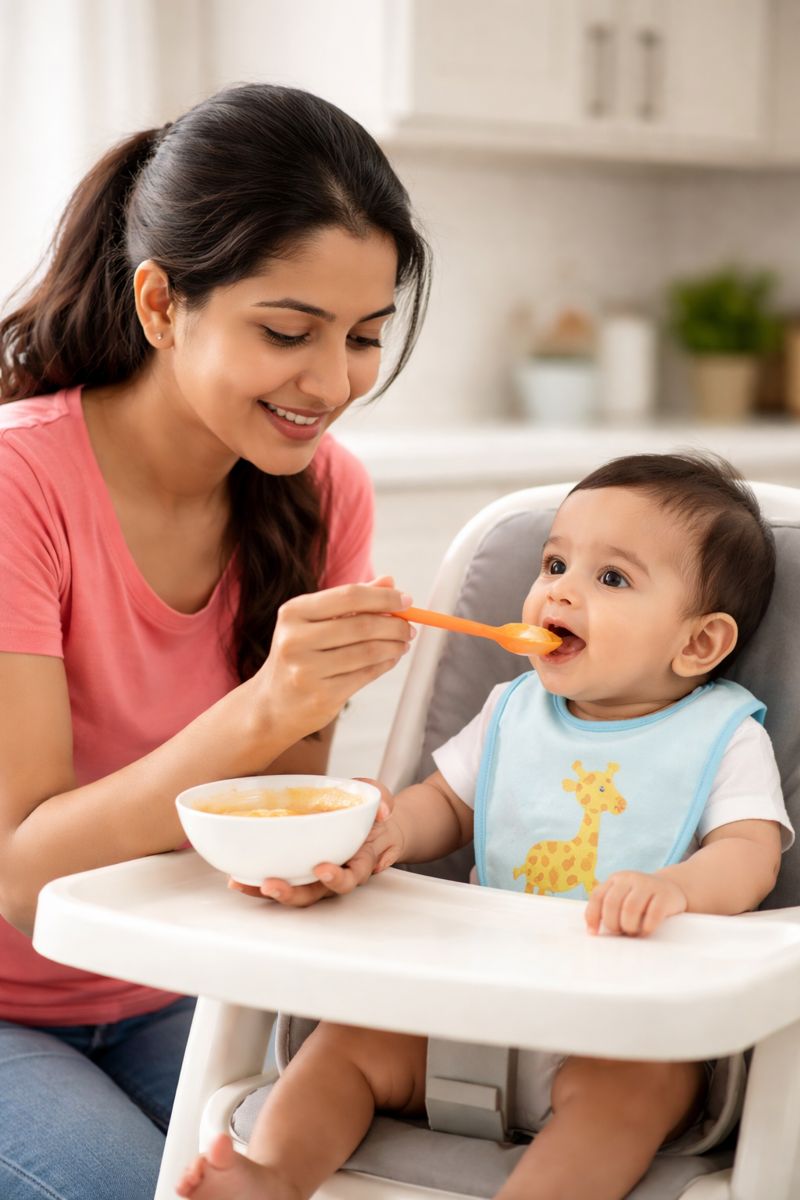
Tips for Safe and Healthy Feeding
- Start small: Initially, start with 1-2 teaspoons, gradually increase the amount.
- Texture matters: Start with smooth puree and than gradually try feeding mashed food.
- Hygiene is key: Baby’s tummies are highly sensitive, so the food given to infant should be completely safe and hygienic.
- Avoid salt, sugar and honey: Digestive system is still developing, so please avoid giving sugar, salt and honey.
- Watch for allergies: Introduce one food at a time, and check if baby is having any reaction with the given food.
Common Feeding Mistakes to Avoid
- Rushing the process: Every child is different, hence their eating capacity is also different. Feed the child keeping their capacity in mind. Never force feed the child.
- Relying on processed snacks: Most of the processed snacks available in the market are high in sugar and salt which is not at all good for the little ones.
- Skipping iron-rich foods: Iron deficiency is common in babies after 6 months of age.
Foods to Avoid in the First Year
- Honey: Not before age one due to the risk of a serious illness called infant botulism.
- Cow’s Milk (as a main drink): Not a suitable replacement for breast milk or formula before one year of age, as it lacks key nutrients. However, it can be used in small amounts when cooking, such as in porridge.
- Salt: A baby’s kidneys cannot process added salt. Do not add salt to their food.
- Sugar: Unnecessary and unhealthy. Avoid adding any sugar, jaggery, or other sweeteners to your baby’s food.
- Choking Hazards: Whole nuts, whole grapes, popcorn, hard sweets, raw vegetable chunks.
How Nibsy Supports You
At Nibsy, we understand that it is big task for busy parents to provide clean, hygienic and nutritious food for their little ones. We designed Nibsy keeping in mind the physical needs of your growing baby.
At Nibsy, we have chosen everything very thoughtfully. We want our Nibsy products to meet the growing needs of your baby because when it comes to your child, nothing less than the best will do.
(Stay tuned for our upcoming launch! Follow us on Instagram @nibsy_official for tips, recipes and updates.)
Conclusion
Your baby’s first solid food is a beautiful memory, a wonderful journey that shapes your baby’s health for years to come and keeps your baby safe. It is this food that makes your baby capable of fighting various diseases.With the right information and a little planning you can provide your children with very safe and hygienic food. Remember, variety, safety and love are the secret ingredients.
Frequently Asked Questions(FAQs)
The best first foods at 6 months are soft, single-ingredient, easy-to-digest foods. Popular options include mashed banana, steamed apple puree, rice cereal, ragi porridge, and well-cooked moong dal water. Always introduce one food at a time and observe for allergies.
No. Doctors recommend starting solids only after completing 6 months.
At 6 months, introduce solids for learning and tasting, not replacing milk. Start with 1–2 teaspoons once a day and slowly increase based on the baby’s interest.
Salt, sugar, honey, cow’s milk, spicy and fried foods.